
Can you do more to achieve this fabled mental state?
Sometimes when I swim, my breathing feels awkward and out of time. My arms are heavy, and my hands slap onto the water instead of slicing into it. My rotation and kick are somehow “off”.
On the other hand, sometimes swimming is magical. Everything is right. It’s fast yet smooth. It’s energising rather than draining. I get a sense of being at one with the water.
This is what “flow” in swimming feels like for me – but what actually is flow?
Total absorption
Psychologist Mihaly Csikszentmihalyi introduced the term “flow” in the 1970s to describe states of deep, immersive concentration where people are fully absorbed in what they’re doing. Flow occurs when you’re doing something challenging enough to demand your attention, but not so hard that you panic or lose control.
Reported features include:
- A merging of action and awareness
- A distorted sense of time
- A feeling of control, even at high intensity
- Reduced self-consciousness
- A sense of effortlessness
- Intrinsic enjoyment
Flow is linked to doing something you’re practised at, at a level that tests you but doesn’t overwhelm you. The concept came from artists and musicians, but athletes describe similar experiences.
In addition to swimming, I’ve experienced flow while writing and, perhaps bizarrely, building spreadsheets. That said, both of these activities can also provoke intense frustration!
Swimming and flow
The concept of flow seems perfect for swimming. Not only does water flow, the word can also describe how it feels to move through the water.
And swimming lends itself perfectly to achieving a flow state. It combines rhythm and repetition, sensory feedback and semi-isolation. And once you have some basic swimming competence, you have a lot of control over your effort level. Times in swimming where I’ve experienced flow include:
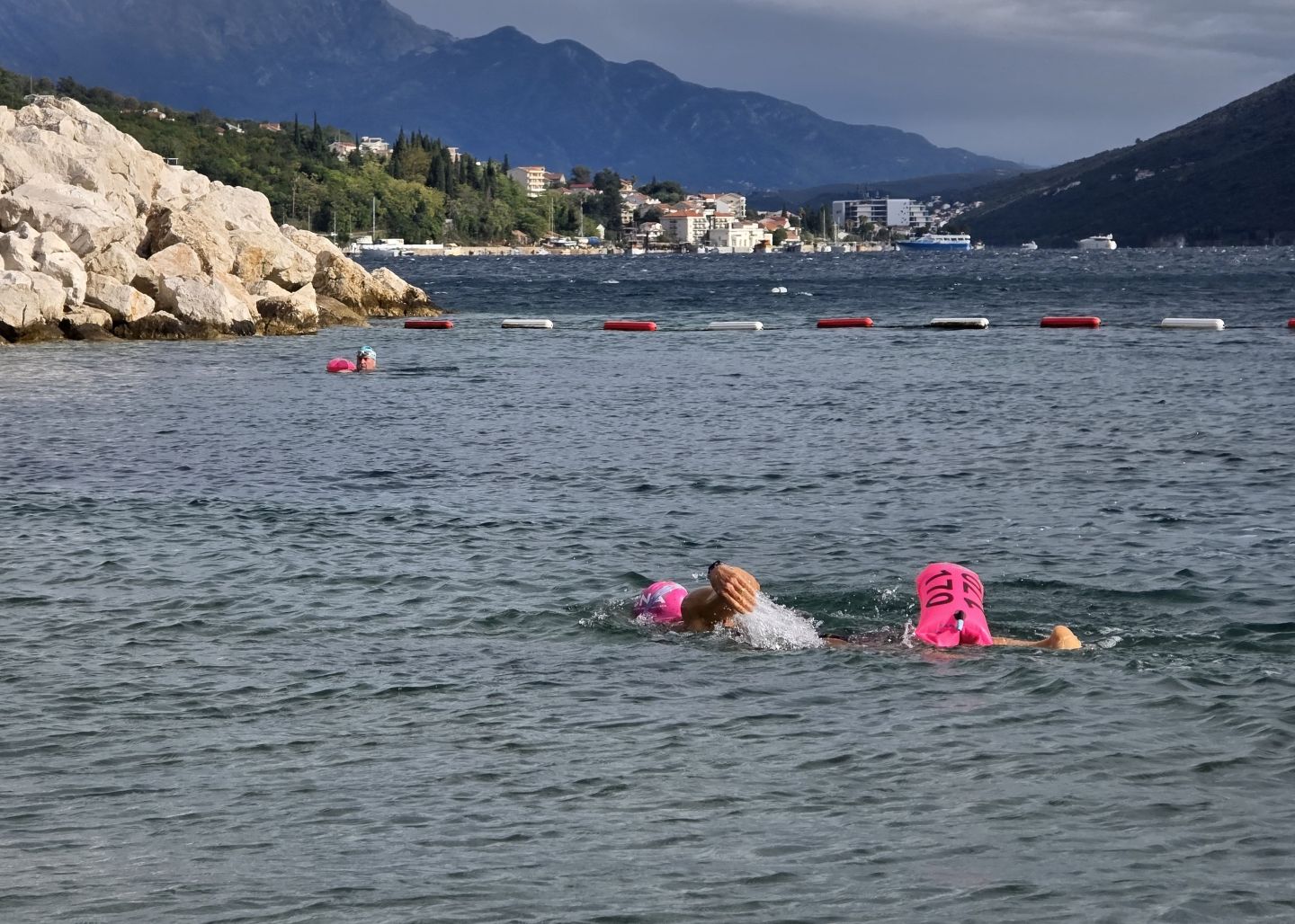
- On long-distance open water swims, after I’ve warmed up and settled into the swim, but before fatigue or cold has set in. It’s calm and relaxed yet strong and powerful.
- In training on repetitive sets such as 10 x 100m with short rest intervals. There’s feedback from the pace clock or the swimmer in the next lane. The effort is hard yet controlled. Speed slowly increases without feeling like I’m trying harder.
- In those rare sprint races where everything goes to plan: a clean dive, powerful underwater kicks, a slick breakout, sleek and powerful swimming, and precise timing of the final stroke to hit the wall. It might take less than 30 seconds, but it’s special.
Find your flow
In my experience, chasing flow is counterproductive. But you can create the conditions in which it’s more likely to appear – and these may be individual.
What we’re looking for is total absorption in swimming, a loss of self-awareness, distorted time, and a sense that your body is doing exactly what it’s supposed to do. It can happen over an extended period or be fleeting, depending on what type of swim you’re doing. Here are my suggestions to help you find your swimming flow.
On long open water swims
- Try to settle into a rhythm as quickly as possible. I count or use a stroke-focused mantra to help.
- Concentrate on your own swimming. Don’t worry about what other swimmers are doing or why the people on the shore are staring at you.
- Use a comfortable and natural breathing pattern – whatever feels right for you. I like to focus on the sound of my out breath underwater.
- Tune your attention to how you feel, not how fast you’re going or “should” be going.
While pool training
- Choose sets that are predictable so you can gauge your effort level from the outside.
- Start at a controlled speed – one which you could sustain throughout the set, but only just (it needs to be challenging).
- Focus on all the different rhythms – of your stroke, your breathing, the lengths and the intervals. Be metronomic.
- If it’s an option, swim side-by-side with a swimmer of similar ability. You will feed off each other’s energy. (Note: this doesn’t work for everyone.)
When sprinting
- Practice all the components of your race in training so you don’t have to think about them on the day.
- Rehearse the race mentally during the lead-up.
- Relax and focus during the final few minutes.
- Double-check your goggles, hat and costume to avoid any distraction through kit failure.
- Whatever your race plan, stick to it.
- Concentrate on execution – but stay relaxed.
But what if it doesn’t happen?
Achieving a flow state is a possible benefit of swimming, not the objective. You can enjoy swimming and get all the benefits without experiencing flow. Or you might have your own “flow” experience that is different to mine or other people’s.
Flow can, sometimes, be negative too. For example, swimming in a flow state feels great, even if you have technique faults. Focusing on those technique elements may snap you out of flow and make your swimming feel awkward – but this is a necessary step towards improving your swimming.
Also, flow is most likely to happen in calm and predictable conditions – but swimming isn’t always like that. If you want to be versatile and adaptable, you will benefit from swimming in a non-flow state.
Just one of swimming’s many gifts
Swimming offers us so much, including the possibility of entering a flow state. Enjoy it if it happens, but don’t use it as a measure of your swimming or try to force it. Creating the conditions when you might enter a flow state are often similar to those for optimal performance – but you can optimise performance without experiencing flow. It’s nice to have, but not essential.
