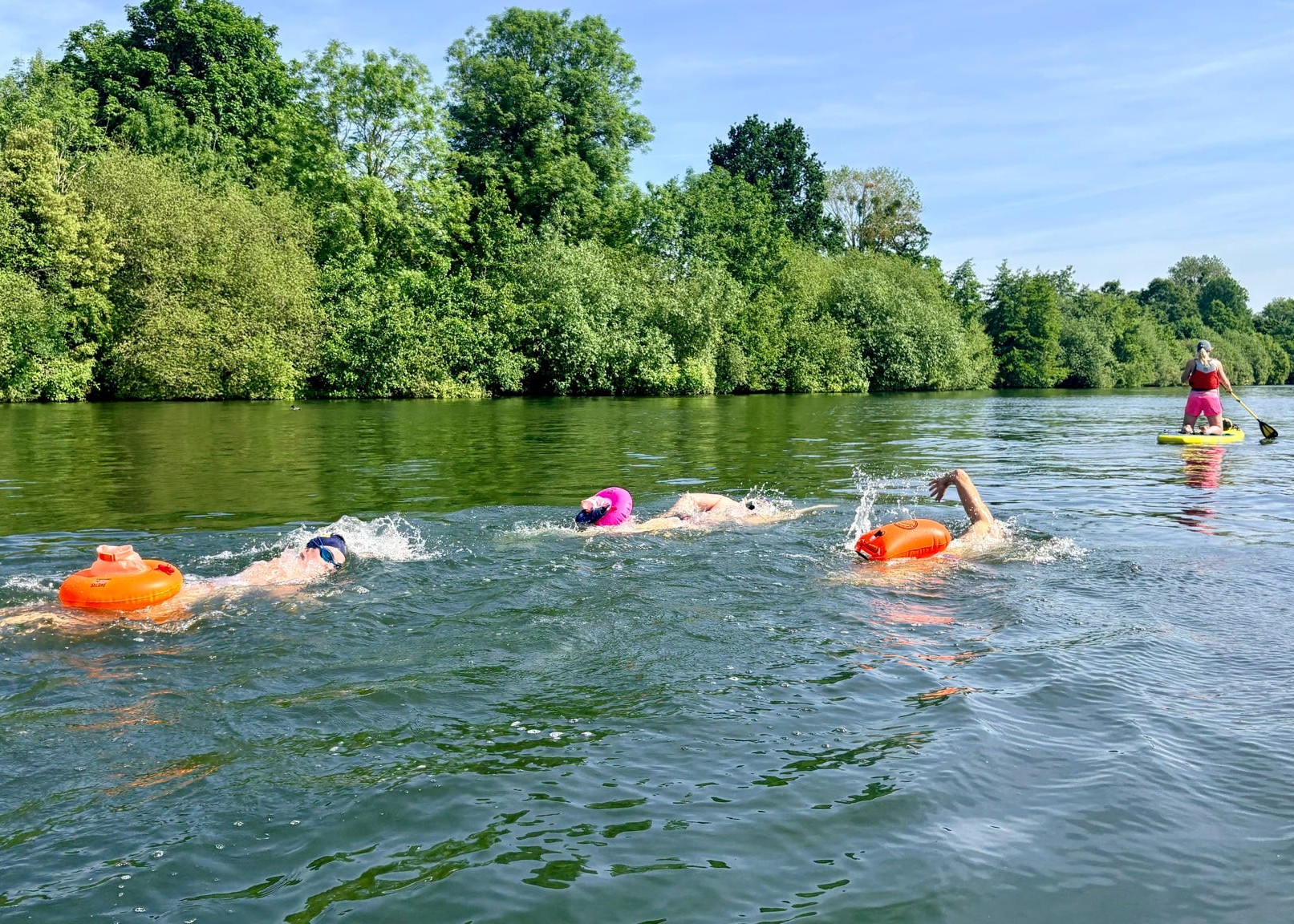
Here are a few highlights from more than 50 years in and around the water.
- You can probably get faster than you think, and for longer than you think
Unlocking the mysteries of great swimming technique and developing your feel for the water takes time, practice and dedication. Not only that, speed in both the pool and the open water is also determined by a wide range of skills above or beyond your swimming stroke. This gives you the potential to keep getting faster for years. Last year, for example, at the age of 59, I swam a lifetime personal best for 100m freestyle – and I’ve been swimming all my life. I’ve seen plenty of adult swimmers making huge gains in their swimming speed across all distances. And even if you can’t get faster in absolute terms, you may still improve relative to others your age.
- If you want to make the most of swimming, find a community
Personally, I usually find swimming alone uninspiring. Swimming with other people transforms the experience, whether it’s a cold winter dip, a leisurely summer swim or a tough pool training session. Connect with other swimmers and contribute to the group. You will have more memorable swims and, if you’re training to increase speed or build endurance, you will get there quicker with supportive people around you.
- The keys to improving are curiosity, concentration and consistency
If you want to get faster at swimming, you first need to understand what makes people fast in the water. Read, watch, ask and learn. You then need to apply what you’ve learned and embed it into your own swimming through concentrated, mindful practice. Finally, you need to do this many times over. There really isn’t any magic.
- Don’t assume improving your technique on its own will make you faster
I’ve seen people with perfect-looking technique getting lapped by splashy, sloppy swimmers. This is because we are not robots and speed also comes from how we connect with the water and our intent. Perfect-looking technique will not make you fast if you don’t apply force to the water. Sometimes it helps to let go of trying to swim perfectly and try to swim fast instead. But note that sloppy but faster swimmers would probably be even faster with better technique.
- Try to enjoy every swim
I’ve seen swimmers who turn every swim into a beast session. Fixated on a long-term goal, they thrash themselves every time they get in the water. The dangers here are burnout or frustration. It is almost certainly not the most effective way to train either. Long term, most people will be better off with a more relaxed approach to training. Yes, the occasional tough session builds fitness, resilience and grit. Tough sessions can also be satisfying to complete. But they need to be tempered with swims at lower intensities.
- Setbacks are inevitable. Try to accept them gracefully and come back stronger
A few years ago, I had a prolapsed disc that caused shooting pains down my arm with every movement of my head or shoulders. Swimming was almost impossible. All I could do was float on my back and kick my legs, so that’s what I did. I then discovered I could do the same on my front if I used a snorkel. Eventually I could start using my arms but not turn my head. Then I could turn to breathe but not look forward to sight in open water.
At times, I was frustrated and even angry that I couldn’t swim as I wanted. But I had to let go of that, focus on what I could do, and rebuild patiently.
Stick with it
I often speak with swimmers who are held back by injury or frustrated by their lack of progress. If this applies to you, I hope what I’ve shared here shows you there is a way forward. Progress in swimming is rarely a neatly planned journey. Sometimes you have to slow down, rewind, or just do what you can in that moment – and try to find satisfaction wherever you are.
What has swimming taught you?