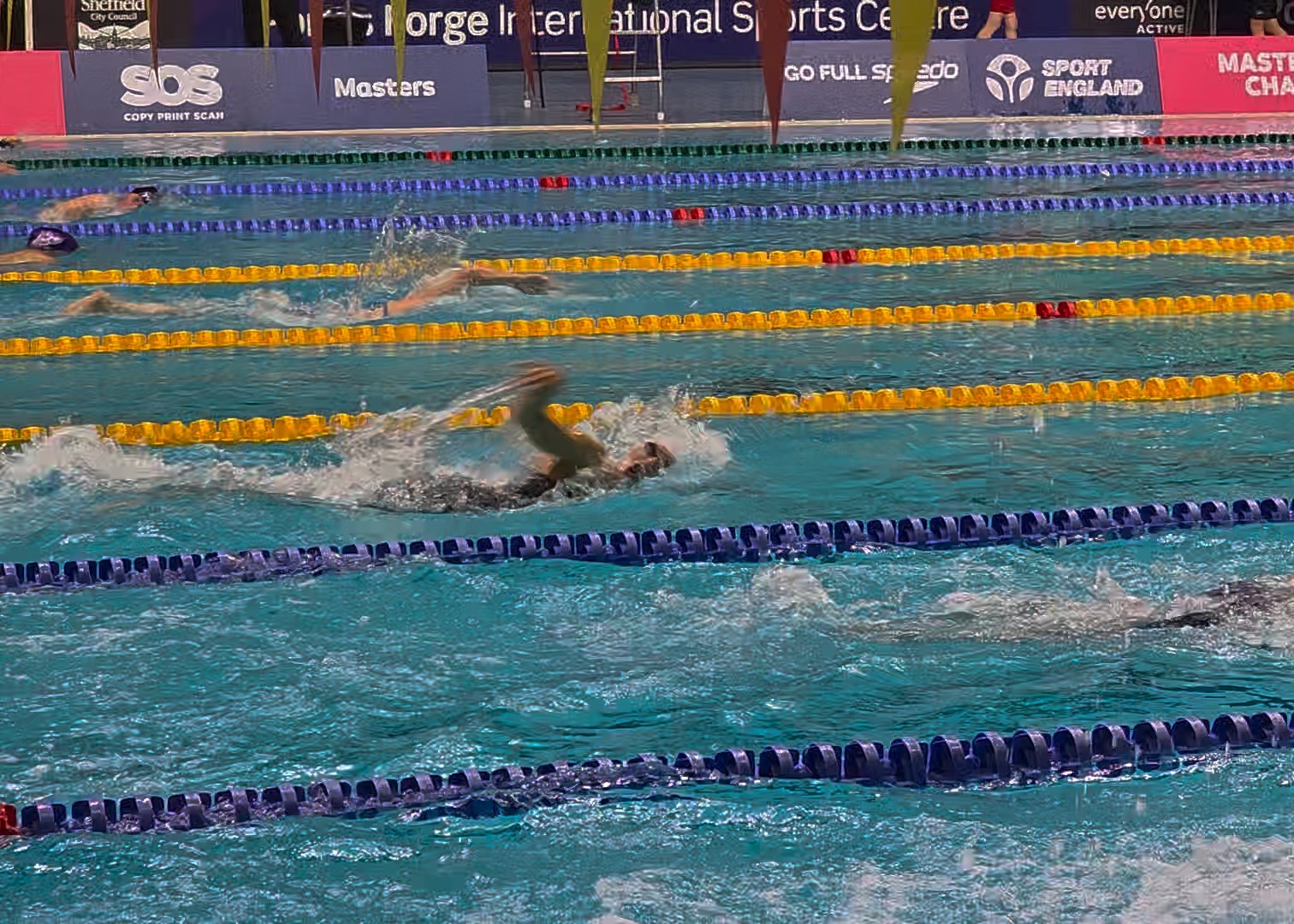
Pool sprints can sharpen your speed, coordination and skills for longer swims
When open water swimmers try pool events, they often gravitate to the longer distances: 400m, 800m and 1500m.
This makes intuitive sense. Open water swimmers train for endurance. For someone who’s done a 10km marathon swim, the 1500m in the pool sounds short. But in pool racing, it’s considered a distance event.
However, there’s a good case to be made for racing shorter distances of 50 to 200m in the pool. It’s not just about becoming a sprinter. Training for sprints can sharpen skills that will also help you on long swims.
A different kind of challenge
In open water, 1500m can sometimes feel too short. I feel as if I’ve barely settled into a rhythm before it’s over. In the pool, the same distance is a slog: Sixty lengths of a 25m pool, 59 turns, and a relentless accumulation of fatigue as you try to hold the pace. It’s just you, the black line, increasing pain and the clock.
A 50m sprint is entirely different. It’s over in an instant but it’s not just raw swimming speed that counts. You need to execute a great start and a perfectly timed finish. In a 25m pool, your turn needs to be on point too. Races are won and lost by fractions of a second. It’s adrenaline-driven, heart-pumping fun.
Find your sprint gear
Long-distance swimmers often say they don’t have a sprint gear. Clearly, some people are naturally better suited to endurance, while others are more explosive. But wherever we fall on that spectrum, we can train and develop our abilities at both ends.
The problem is, while accumulating endurance mileage, we may rarely fire up our sprint engine. Over time, without practice, swimming fast becomes less familiar and more difficult. We may also be missing out. Sprinting is joyous, and speed work can help us become more efficient swimmers.
Build a broader skill set
Starts and turns matter in long pool swims, but endurance and swimming technique primarily determine how fast you go, the same broad abilities that count in open water.
Going fast in shorter pool events needs a different set of skills: a powerful start, turns at speed, underwater streamlining and event-specific pace control. You also need the neuromuscular coordination to move your arms and legs fast and effectively. Developing these skills adds a fascinating new layer to your swimming that you may find a welcome change from endurance-focused training.
In brief, sprint events in the pool are fun, interesting, and – for me – a lot less painful than longer distances. You don’t need to overhaul your training to start building the skills to do them. And you don’t need to enter a race to benefit: training for shorter events can still help you become a stronger, more rounded long-distance swimmer. This type of training can also develop power, coordination and your overall athleticism. What’s not to like?
Open water swimmers often look for longer swims to do. Sometimes though, you might find a very short one offers an equally rewarding challenge and helps you swim faster too.