
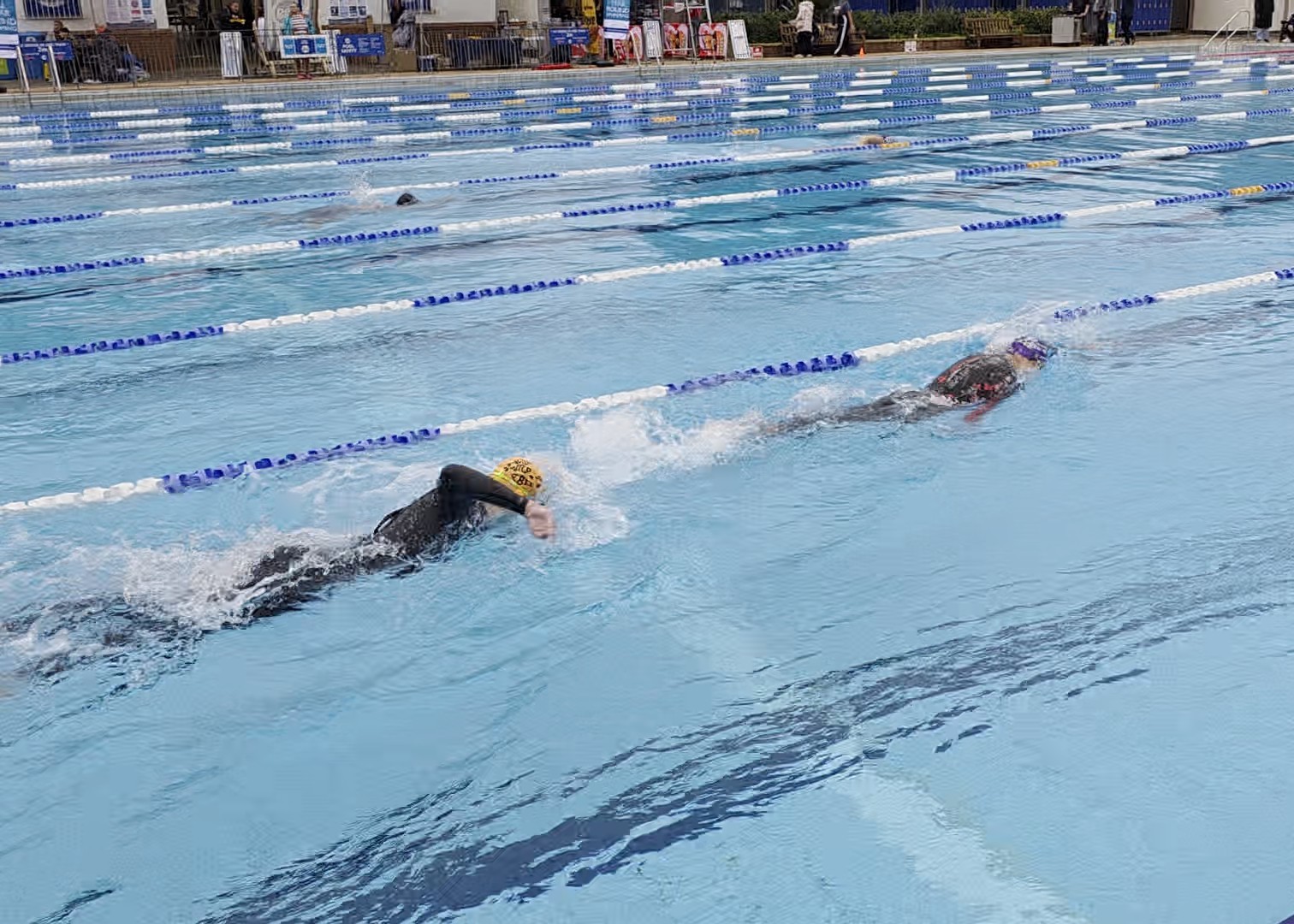
Improve your training by understanding when to draft, and when not to
In organised pool training, swimmers are typically asked to leave a 5-second gap between themselves and the swimmer in front.
This gap serves a few purposes. First, if you’re using a pace clock, it’s easier to monitor your swim speed if you leave a true 5s gap. Second, it reduces crowding and risk of collision, especially around turns. Third, the following swimmers shouldn’t benefit from drafting with a 5s gap.
At least, that’s what the theory says.
What the science says…
Studies in flumes suggest swimming closely behind another swimmer can reduce drag by 20% and reduce your oxygen cost by up to 25%. But those benefits diminish rapidly with distance. With a gap of 5 seconds, they should be minimal.
… and in the real world
But does that correspond with your experience? It doesn’t with mine.
So what is going on?
It’s likely that the benefit is more psychological than physical – but nevertheless real. Following another swimmer reduces cognitive load. You don’t have to worry about pacing as you take your cues from the person in front. You follow their rhythm, which typically reduces your perceived effort. There is less pressure. As the lead swimmer, you feel a responsibility to hit the time targets.
Speed differences and actual distances
Also, studies are usually done with elite-level swimmers where a 5-second gap may correspond to a physical distance of 10m or more. Recreational swimmers move more slowly, and the physical gap is smaller – perhaps 5m or less, which is inside the distance where drag benefits can still be noticed, even though slower swimmers create less of a draft.
The problem of bunching
Finally, there is the very real phenomenon of bunching. We instinctively feel that our effort reduces the closer we get to the swimmer in front. If we’re the second or later swimmer, this tempts us to start each interval fast, close the gap to the swimmer in front, and then settle into a more comfortable speed once we’ve secured the draft.
So is 5 seconds enough?
It depends!
You first have to consider if there is any harm in drafting. In a race, it can be a useful thing to do, so practising it is a good thing. However, if you are looking for an honest measure of your swimming fitness, you won’t find it through drafting.
Drafting directly behind someone’s feet allows elite swimmers to move some 3 to 5s faster per 100m. The time gain for slower swimmers is even more, something like 8s per 100m for someone who normally swims at 2 minutes per 100m. If you constantly draft during training, you may not be working at the optimum intensity to improve your swimming, nor will you have a good measure of your actual swimming speed.
If you’re doing a training set where pace measurement is important, then don’t draft. If you’re doing something like a low-intensity long swim, where keeping your effort low is important, drafting might help.
As for the 5-second gap, if you can resist the temptation to close the gap, it’s probably sufficient most of the time. In a crowded lane, it might also be the most practical. If you left a longer gap, the front swimmers may be returning before the back swimmers start!
But if you have the space, and want to eliminate the drafting benefit, a 10-second gap may be better. Just be aware that even with a 10-second gap, you can still get those psychological benefits.
Key points
- Swimming close behind someone can reduce drag by around 20% — enough to feel like dropping a training zone.
- At the same time gap, slower swimmers sit physically closer to the person ahead, so they may get more drafting benefit than fast swimmers.
- Drafting can make you 3–8 seconds per 100m faster, depending on your pace.
- Even when the hydrodynamic effect fades, the psychological benefit remains — following someone reduces cognitive load and perceived effort.
- If you always draft in training, you might be getting a flattering picture of your fitness… and missing the stimulus you actually need.
