
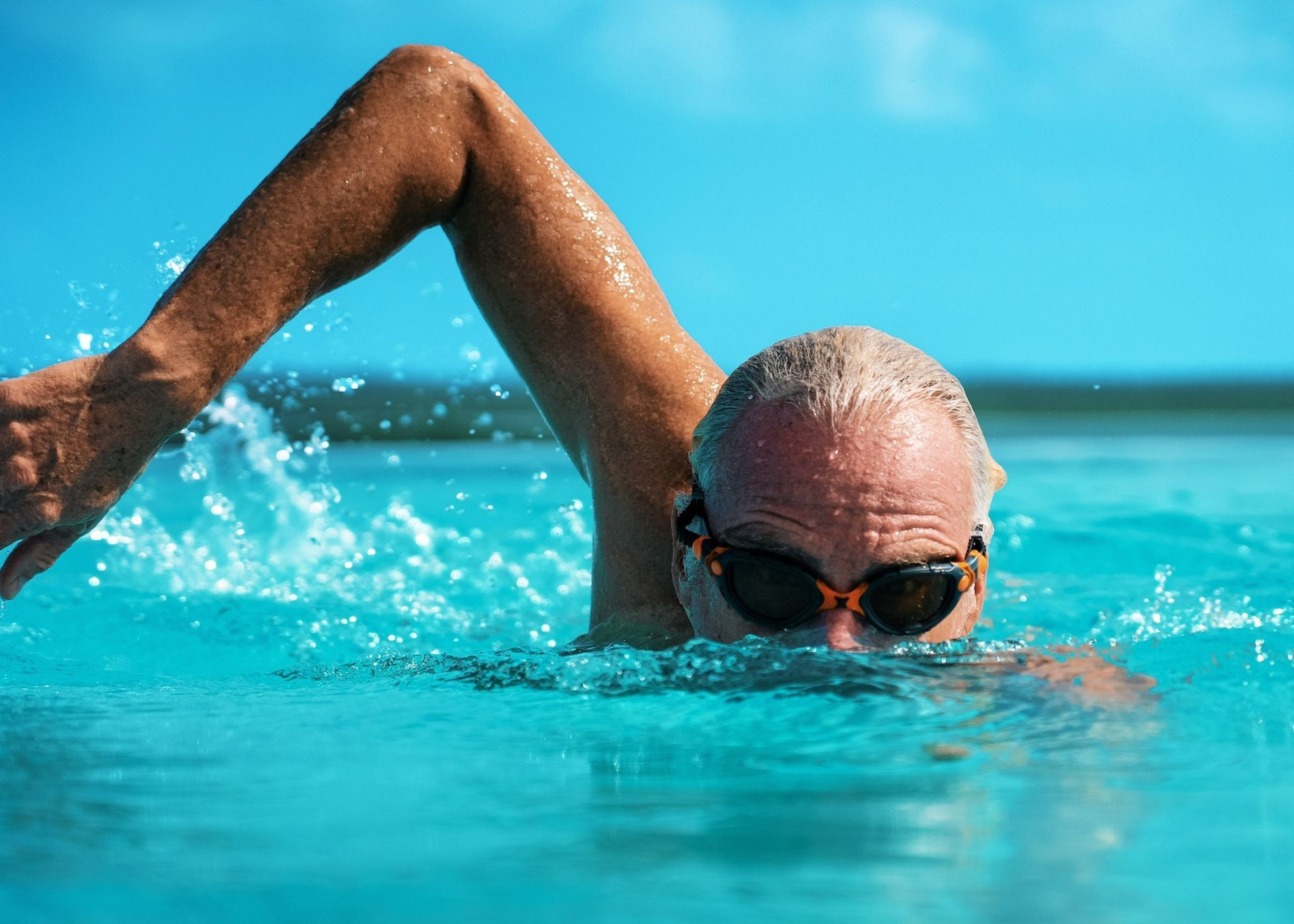
At 62, Olivier Delfosse still trains to win and set records. He spoke with Ben Lane.
When Olivier Delfosse talks about swimming, his story spans decades from a 1970s pool in Brussels to the bends of river swims and the long, restless blue between Capri and Napoli.
At sixty-two, he still trains to win, not out of nostalgia or pride, but out of habit. A simple, lifelong urge to go faster than before.
From Lanes to Laurels
Olivier’s first strokes came early, breaststroke, then crawl, learned in a Brussels swimming club in 1971. Before long, speed became the goal. By the late seventies, his training had turned “American style” with higher volume, harder intervals, and a fierce focus on improvement. The results followed with national titles in the 4×100 metre relay and a Belgian record that stood for four years.
Life intervened in the 1990s. Marriage, children, a house, work. For a while, swimming faded into the background. Then, in 2008, an old friend called with a challenge: join a Masters relay at the World Championships. They finished second, and the swimming flame reignited.
“I told him,” Olivier recalls, “if I come back, it’s for everything.” And he did, racing multiple strokes and distances at European and World Masters events, winning across his age group. But after a European Championship in 2013, he walked out of the pool knowing something had shifted. “I was finished with the pool walls,” he says. “I needed open water.”
The Call of the Sea
The transition came through friendship. A swimmer he knew wanted to cross the Strait of Gibraltar but couldn’t do it alone. “He had no fingers,” Olivier says simply. “We trained. We crossed.” That shared crossing, “the salt, its current, its purpose” changed everything.
From 2015 onward, Olivier left pool racing behind. He joined the early Oceanman events, when open-water fields were small and experimental, and began winning regularly: five, ten, twenty-five kilometres. “Between 50 and 59,” he says, “I won every race I entered.”
Capri–Napoli became a favourite. He had one successful crossing, and a second attempt that ended short. “It happens,” he shrugs. “That’s open water. The sea decides.”
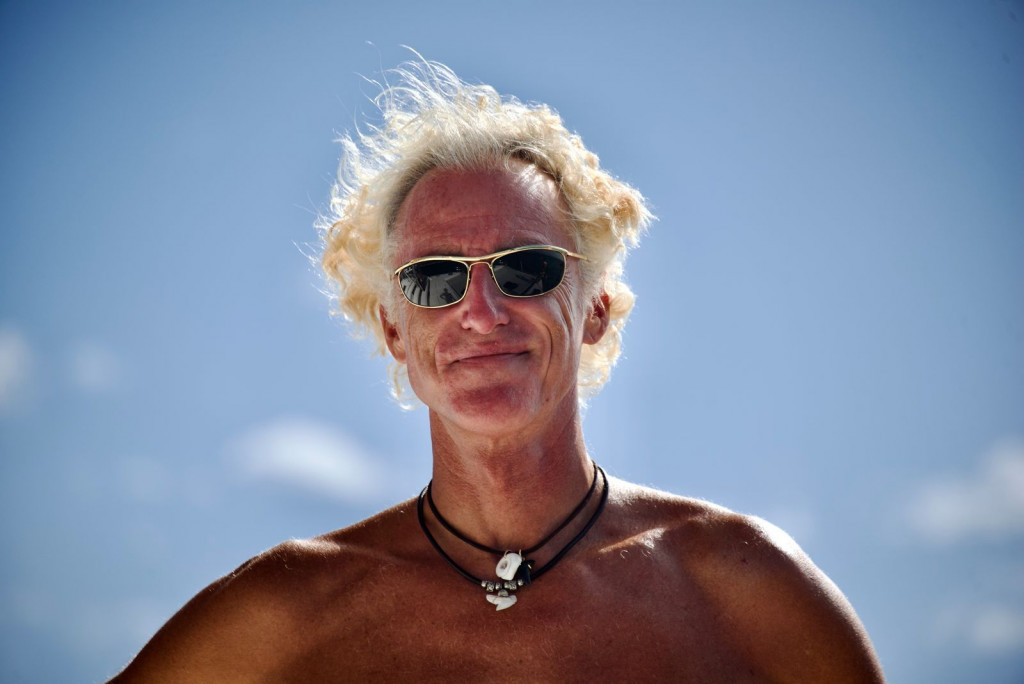
The UltraEbre Habit
Olivier is now a regular at Spain’s UltraEbre; the 33 km river marathon that winds through the stunning Catalonia countryside. He has won it once and finished on the podium several times. For him, it’s a race of rhythm and respect.
“The first half feels generous,” he says. “The current helps, and you feel light. Then, near the delta, the water thickens, the wind shifts, and suddenly you’re working twice as hard for half the speed. That’s when the real race begins.”
He talks about the River Ebro’s quirks with affection and occasional exasperation. “Sometimes you find whole areas of vegetation. You feel it around the neck, shoulders, knees. It is a web of weed. You can’t force through it. You learn to adapt. The locals know the line. Next year, you come back smarter.”
Training at Sixty-Two
Olivier’s training is practical and quietly methodical. Winter is for recovery and gentle movement; the build begins in January. Early sessions focus on awakening the body through cycling and strength work before transitioning to swim volume.
His preparation follows a pattern:
- January–February: Two to three pool sessions a week (3–4 km each), light gym, and cycling.
- Spring: Swim most days, mixing aerobic sets of 4–6 km with technique work; strength training tapers off.
- Final 8–10 weeks: Weekly 10 km swims, holding steady pace for 2½ to 3 hours — long, uninterrupted rhythm sessions.
The focus is consistency, not bravado. “At my age,” he says, “the goal isn’t to prove something new but to keep doing what works, and to do it well.”
The Will to Win and the Grace to Finish
Olivier still races to win. He studies start lists, anticipates conditions, and approaches each event with a well-formed strategy. But his outlook has widened with time.
“In a mass-start race, you might have 300 swimmers,” he says. “Maybe twenty are racing to win. The rest are racing for the experience, for the distance, the challenge, the finish line.”
“At the podium, you watch the last swimmer arrive. The children running to greet their father or mother like a superhero. The first and the last. Different, but the same story.”
Training for the Finish
On the hard days, Olivier breaks the swim into tasks rather than kilometres. Hold rhythm. Fix the line. Keep feeds short. Breathe without panic. “I don’t bargain with the distance,” he says. “I win the next section.”
He also rehearses the feel of fatigue. During his weekly long swims, he mimics the River Ebro’s rhythm which is easy flow early, tightening control in the final hour. “You need to meet that feeling before race day,” he says. “When the river asks for it, your body already knows the answer.”
Notes for Marathon Swimming
Olivier’s advice for aspiring marathon swimmers is practical and direct:
- Give yourself six months of preparation. Build gradually.
- Include a weekly 10 km swim in the final two months.
- Use variation to stay engaged.
- Change breathing patterns, add pull sets, or short backstroke blocks.
- Expect obstacles such as weeds, wind, and slow patches. Manage them and move on.
- Train your feeds. Keep them short, personal, and practised.
He keeps his own nutrition minimal but stresses that each swimmer must find what works. “The worst mistake,” he warns, “is experimenting on race day.”
Why He’s Still Here
Olivier’s competitive streak hasn’t faded. He still measures success in where he is placed on the podium, but the deeper satisfaction lies elsewhere. It lies in the shape of the season itself: winter rest, spring build, summer strength, the return of rhythm.
He prepares so thoroughly that by race morning, there’s no fear left, only curiosity. “Can I catch the guy in front?” he asks himself. “And if not, can I hold my best rhythm?”
He pauses, then smiles. “And of course, seeing my family at the finish. That feeling never changes.”
