
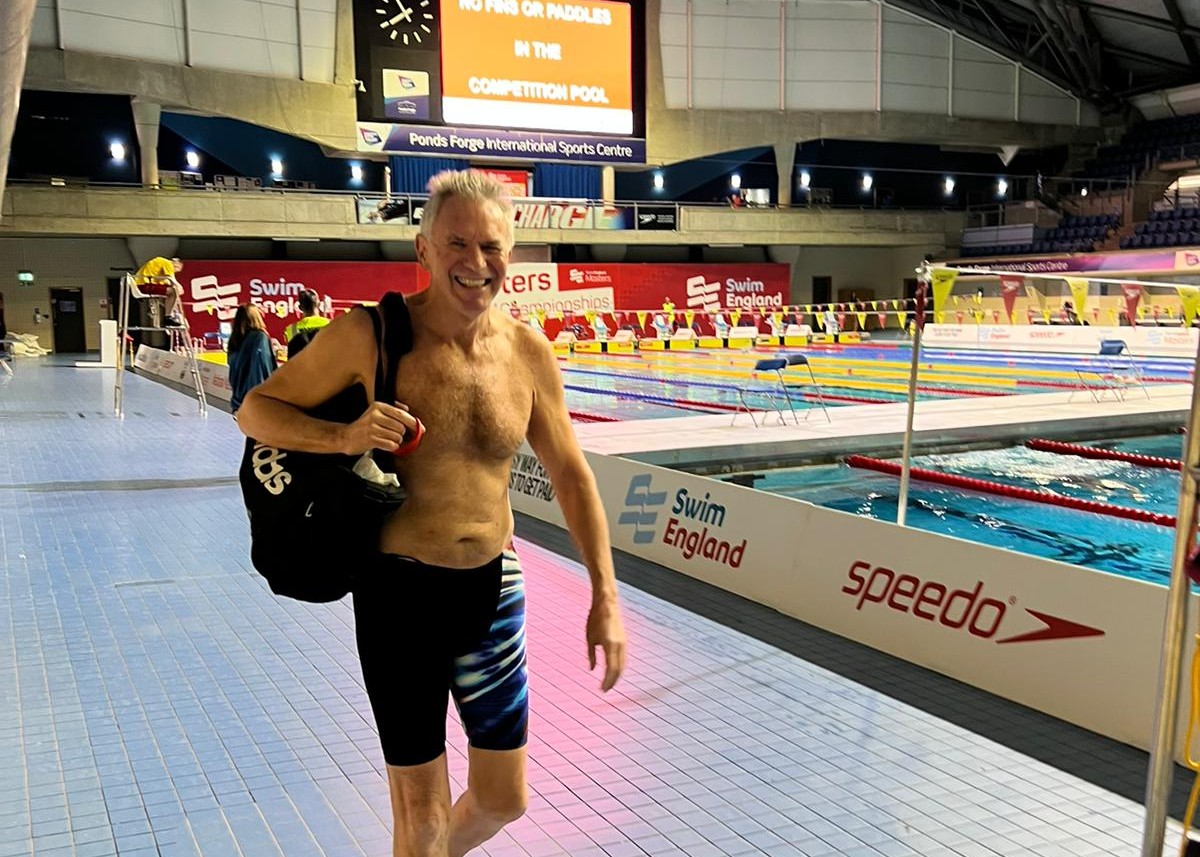
We spoke with Chris Fidler, who’s just had a pacemaker fitted, to find out how it will impact his swimming
Chris Fidler started masters swimming at the age of 46 in 1999, after a 20-plus-year gap from any serious training. Within a few years, he was training six days a week – a schedule he maintained into his early 70s. This led to multiple medals and national masters swimming titles across a range of strokes and distances.
Then, earlier this year, he was fitted with a pacemaker, which brought an abrupt stop to his swimming. Still, he’s optimistic about a return to full swimming, albeit with some modifications. We caught up with him to find out what triggered the need for a pacemaker and what the implications are for his swimming.
As a lifelong swimmer and someone who has always kept fit, was it a surprise that you had to have a pacemaker fitted?
Yes! It was somewhat of a surprise. I’ve always kept fit throughout my life, having swum both as a child and as an adult. In addition to swimming, I’ve run a couple of marathons, played tennis regularly, and generally always kept active.
What were the warning signs that you might need a medical intervention?
For a number of years, I’ve frequently had episodes of shortness of breath. These episodes were not constant but would come and go. When training, I found I really struggled to breathe, even while swimming steadily during a warmup. I once swam a competitive 1500 freestyle and was unable to tumble turn after 500m. I swam another 1500 two weeks later, tumbled every length and swam 40 seconds quicker. I was prescribed asthma inhalers, but that made no difference. Eventually, it was my low resting heart rate that led to the pacemaker. I’d assumed that a low rate was due to my fitness, but the rate kept getting lower and lower, often in the 30s and sometimes into the 20s.
What advice have you been given about returning to swimming training and racing?
The overwhelming advice is steady. No swimming for 6 weeks and then a gradual build-up. The issue appears to be centred around the wires from the pacemaker becoming detached due to the swimming action, particularly fly and, to a lesser extent, front crawl and backstroke. Breaststroke has been recommended.
From what I’ve read online, it seems that the initial 6-week period is the key, after which swimming can be resumed. The exception seems to be fly, which appears to be a no no.
How do you feel about swimming now? Is having the pacemaker something you think about while swimming?
I will certainly be thinking about it once I start, although it remains to be seen how long it will take for me to become confident enough to swim front crawl fast. I think it’ll be a matter of confidence.
How has it impacted your swimming performance and ambitions?
I can’t say yet how having a pacemaker will affect performance. The general consensus is that it shouldn’t have any detrimental impact. My intention is to try to get back to the standard I was, and to compete. I may focus more on breaststroke than previously, and less on fly and individual medley.
Can you explain how the pacemaker works and how it might impact your swimming?
The pacemaker kicks in if my heart rate falls below 60bpm. For me, that will be whenever I’m resting. The maximum it will go to is 130bpm but if my heart wants to beat quicker than that, it will; the pacemaker doesn’t stop it.
Do you think being active contributed to you needing the pacemaker?
The slow heart rate is just one of those things, but it could have been exacerbated by swimming as my fitness resulted in a lower rate. At one point during the diagnosis, it was suggested I do less swimming (i.e., lose fitness) in order for the resting heart rate to increase! I did reduce the swimming, but it made no difference. Had I stopped altogether, then maybe the outcome would have been different, but I doubt it.
Now you’ve had the operation, do you think your fitness history will help you recover?
I think being fit has definitely helped. The first few days I felt groggy but after that I felt fine and have started walking around 5K each day.
A note on pacemakers and individuals
Chris’s experience reflects his specific diagnosis (a slow resting heart rate) and the way his pacemaker is programmed. Pacemakers differ widely depending on the heart condition being treated and the device’s settings. Anyone returning to swimming should take individual advice from their cardiologist or pacing clinic, particularly around stroke choice, intensity, and heart‑rate limits.
Many thanks to Chris for sharing his story. It highlights a common theme when returning from injury or surgery. It takes time not only to heal physically but to learn to trust your body again and adapt to new realities.
Do you have any experience of swimming with a pacemaker? How has it changed your swimming?
