
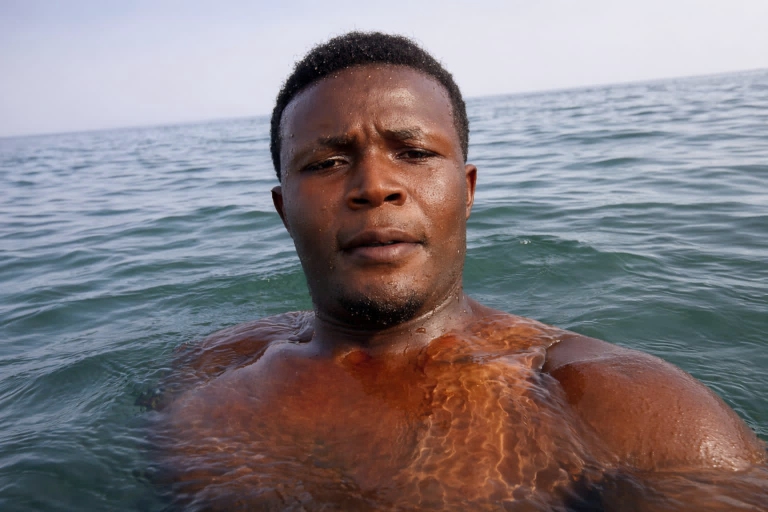
Philip Lucas Awiti shares how he navigates the hazards of swimming in Africa’s largest lake
Philip Lucas Awiti was born in Karungu, Migori County, in Southwestern Kenya in 1998. He grew up in the small rural fishing village of Nyamanga, where he swims today. But while bathing at the lake was part of his childhood, he never really knew how to swim.
In 2017, he moved to Nairobi to study biochemistry and joined the college American Football team – the first ever American Football Team in Kenya. Team training included sessions in the university swimming pool.
After an incident in the pool where he almost drowned, he promised himself that he’d become an expert swimmer.
He now swims in a pool whenever he’s in Nairobi, where he works as a personal trainer and gym instructor, and ventures out into Lake Victoria when he returns home.
He says: “Lake swimming has become my leisure activity and it’s also a great way to exercise and train my cardiovascular endurance.”
He uses his swimming adventures to promote physical health awareness and the need for more people to embrace exercise as a form of preventative medicine.
“I also look at outdoor swimming as a way to call upon society to embrace nature and its conservation because we are part of it after being inspired by ocean swimmer and activist Lewis Pugh.”
You can find Philip on TikTok (@PhilipLucas1) and on Facebook (@philip.lucasodhiambo).
Here he tells us about the risks of swimming in Lake Victoria and how he manages them.
Outdoor Swimming in East Africa: How I Navigate the Risks of Lake Victoria
Outdoor swimming is a pursuit of freedom and a return to nature. For me, that freedom lies in the open waters of Lake Victoria, along the Bay of Karungu in western Kenya. I have been swimming here for nearly five years. The clear, deep-blue natural waters of the lake keep me coming back. But like any wild environment, these waters demand respect. Lake Victoria is dynamic, and sometimes, unforgiving.
Lake Victoria is vast. The water feels endless, and the horizon blurs into sky. It seems ideal for open water swimming – and I love swimming here. It’s a way of life as much as somewhere spectacular to train.
But swimming here comes with real risks that need to be respected and managed.
Bilharzia: Silent but Manageable
Bilharzia is a parasitic infection associated with freshwater bodies across the region. It is caused by microscopic worms released by snails that burrow into the skin. It causes chronic inflammation of the intestines, liver and urinary system.
It is a risk I take seriously, even though I have never experienced symptoms, nor do I know anyone close to me who has. I try to reduce the risk by limiting my swimming to deeper parts of the lake, away from shoreline vegetation where snails are more likely to be. I also get regular health checks for schistosomiasis, which gives me reassurance, and would also allow me to get treatment if I did get infected. Luckily, bilharzia (or schistosomiasis) can be treated relatively simply with a single dose or short course of drugs.
Wildlife: Crocs & Hippos
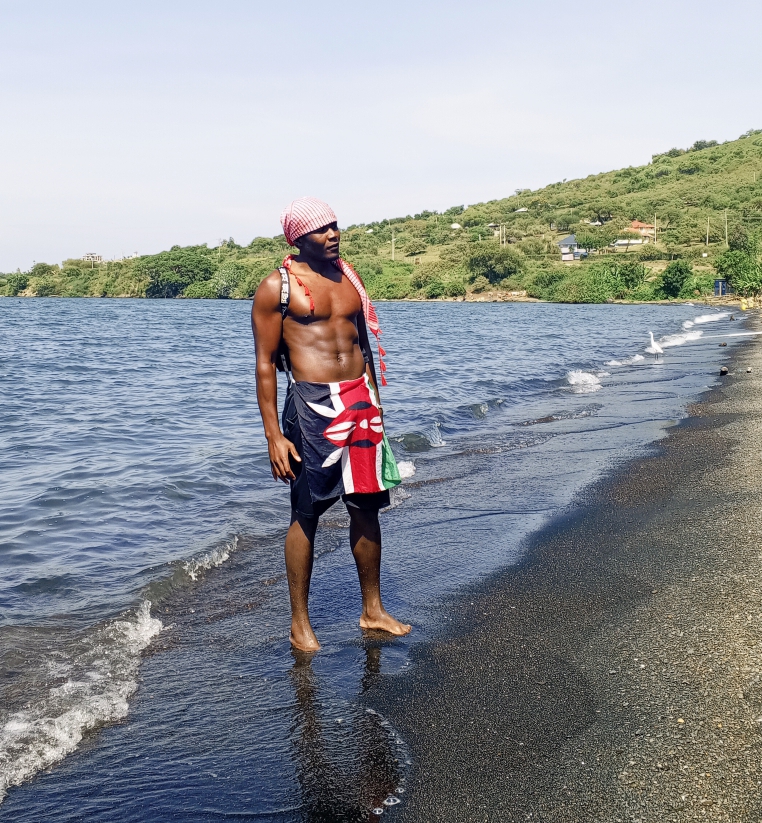
Hippos and crocodiles are often the first things people mention when I tell them where I swim. Both are dangerous and unpredictable animals that no swimmer would wish to encounter. My approach here is to be aware and vigilant rather than anxious. I pay close attention to public advisories and local knowledge, particularly updates from wildlife authorities. I swim only in designated areas, places where human activity is established and monitored.
At the same time, as I do for bilharzia, I adapt my swimming to reduce risk. For example, I usually start by paddling out into the lake in a small wooden canoe and swimming well beyond the shoreline, often more than a kilometre out. Hippos and crocodiles, like snails, prefer the shoreline and shallows. The further away from the shore you go, the safer it gets.
Even so, I always look around carefully before I swim!
Water Conditions: Be Aware of Sudden Changes
Lake Victoria is volatile. Conditions can change rapidly. A sudden wind can quickly generate waves on chop that make swimming or paddling difficult or dangerous.
I find it best to swim early in the morning, when the lake is at its most peaceful. If I’m lucky, it’s glass-like and meditative. But I do sometimes embrace more challenging conditions. As long as it’s not dangerous, I enjoy swimming through the waves.
Pollution: A Growing Concern
Unfortunately, industrialisation in East Africa has increased the risk of pollution. Luckily, where I swim is some distance from the worst-affected areas. But it’s not a problem I ignore.
Rather, I see my swimming as a platform. By sharing my experiences, I hope to raise awareness and inspire policy efforts to protect this incredible lake.
Positives too!
I hope my description of the risks doesn’t put people off swimming in Lake Victoria. It’s too easy to worry about the dangers and forget about the positives. For example, on many swims, I see egrets, African fish eagles and monitor lizards, which adds to my sense of wonder.
In fact, the vast majority of wildlife encounters aren’t scary or dangerous at all to a swimmer. In fact, it is extremely rare to encounter the ‘dangerous ones’, especially in areas with frequent human activity. They get all the attention due to some unpleasant past incidents. But there are countless species of birds, crustaceans, amphibians and harmless reptiles that I could only name if I were a qualified taxonomist.
I also often swim with my brother and with friends – companionship adds to the experience, and makes swimming safer too.
While the risks of open water swimming in Africa are different to those you might encounter in Europe or elsewhere, they are manageable. And for me, the joy and benefits I get from swimming far outweigh the risks.
To learn more, please follow me on TikTok or Facebook. I love connecting with swimmers around the world.
Philip Lucas Awiti
