And how it’s made me a stronger all-round swimmer, by Alison Attfield
Renaissance Swimmer Club member Alison Attfield tells us how she was drawn to surf lifesaving, and why she keeps going back for more.
I learned to swim as a child and competed in synchronised swimming, now called artistic swimming, until I left school. Then, working in sports centres, I taught swimming for a while but gradually dropped it altogether.
After moving to Cornwall in 1995, it took until about 2012 before I wondered why, despite living so close to the sea, I never swam outdoors. I was the person wrapped up on the beach saying, “it’s too cold”.
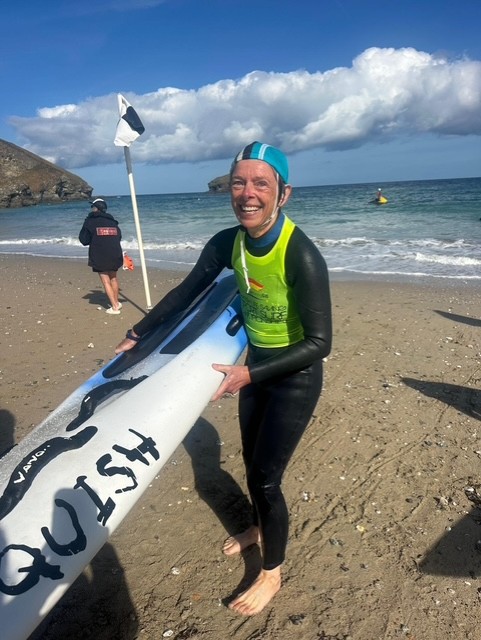
On impulse, I joined a “Women in Waves” event as part of a Falmouth-based activities week called Zestival. Young coaches from Gyllyngvase Surf Lifesaving Club encouraged us to enjoy the sea, showed everyone how to paddle on rescue boards and introduced us to the basics of surf lifesaving. We played games and had fun: it was exhilarating!
That experience shifted my mindset, and I began to embrace being outside, developing my sea swimming skills and, from early attempts at swimming and being knocked over by the waves, began to appreciate the all-round benefits of this new sport.
Again, linking back to my younger days, when I had gained personal survival awards (think: inflating pyjama bottoms and picking up rubber bricks from the deep end of the diving pit), and the Bronze Medallion in pool lifesaving as it was then, I enjoyed developing my skills further. Techniques in protecting myself from a casualty by ducking away, towing and resuscitation came back to me, and I joined Gyllyngvase SLSC where we practised these drills at our weekly Masters club night.
From curious to competitive
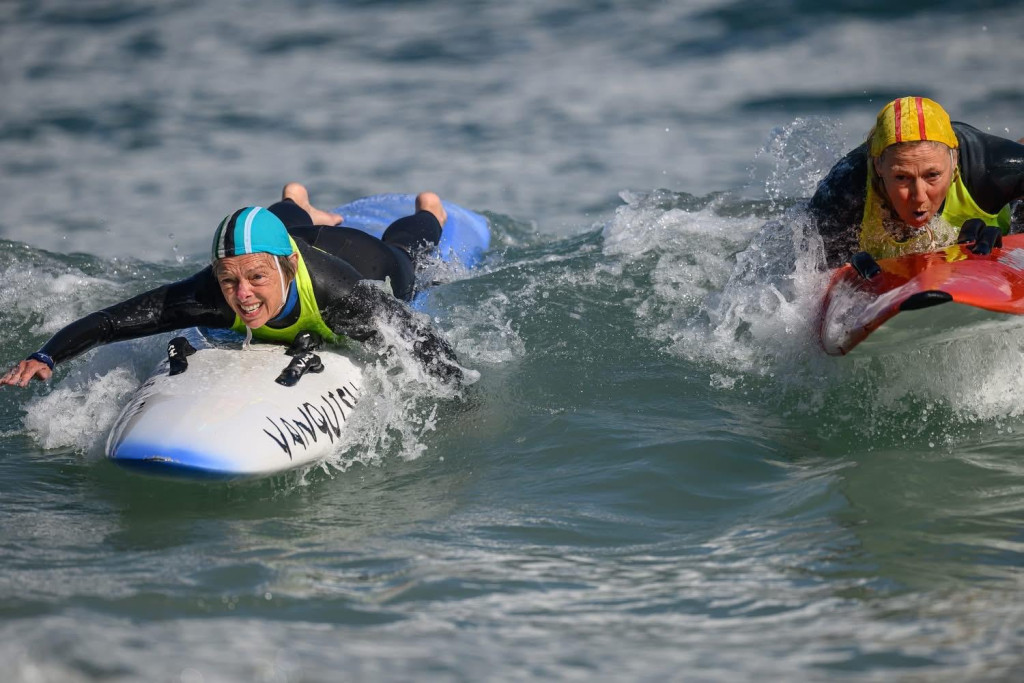
Gradually I took part in more sessions, on the beach during the summer and at the pool in the winter. Through regular training, which included a mix of competition training, lifeguarding skills practice and running, I became a stronger swimmer and much fitter. The sea provides a wonderful opportunity to develop physical strength due to the resistance of the waves. Pool sessions allow a focus on technique. Having a seasonal training pattern works well with the British weather.
Over the years, I have participated in Cornish and National surf lifesaving competitions, gained my Surf Lifeguard award, which I keep up to date, and qualified as a Level 2 open water swim coach and surf lifesaving coach. As a club volunteer, I coach our women’s group and support club members to gain their Level 1 surf lifesaving coach qualification.
What is the sport of surf lifesaving?
Surf lifesaving is a competitive sport in which participants enter events that replicate the skills and actions lifeguards take to maintain safe beaches, promote awareness of the ocean and be ready to rescue anyone in need while on duty.
In the UK, it is mainly volunteer- and community-led and run under the guidance of Surf Lifesaving GB (SLSGB as the national governing body). It is structured in age groups, typically starting around age 7 for Nippers, with Youth being 13 -18/19, Open being 19+, and Masters being for those aged over 30. Within Masters, we compete according to age groups up to 70+.
What events are there?
Surf lifesaving consists of ocean events and beach events, adding to the fun. The ocean events mirror the water-based rescues lifeguards may undertake, and the beach events are designed to promote and develop speed of response in emergency situations. Each discipline has individual and team events.
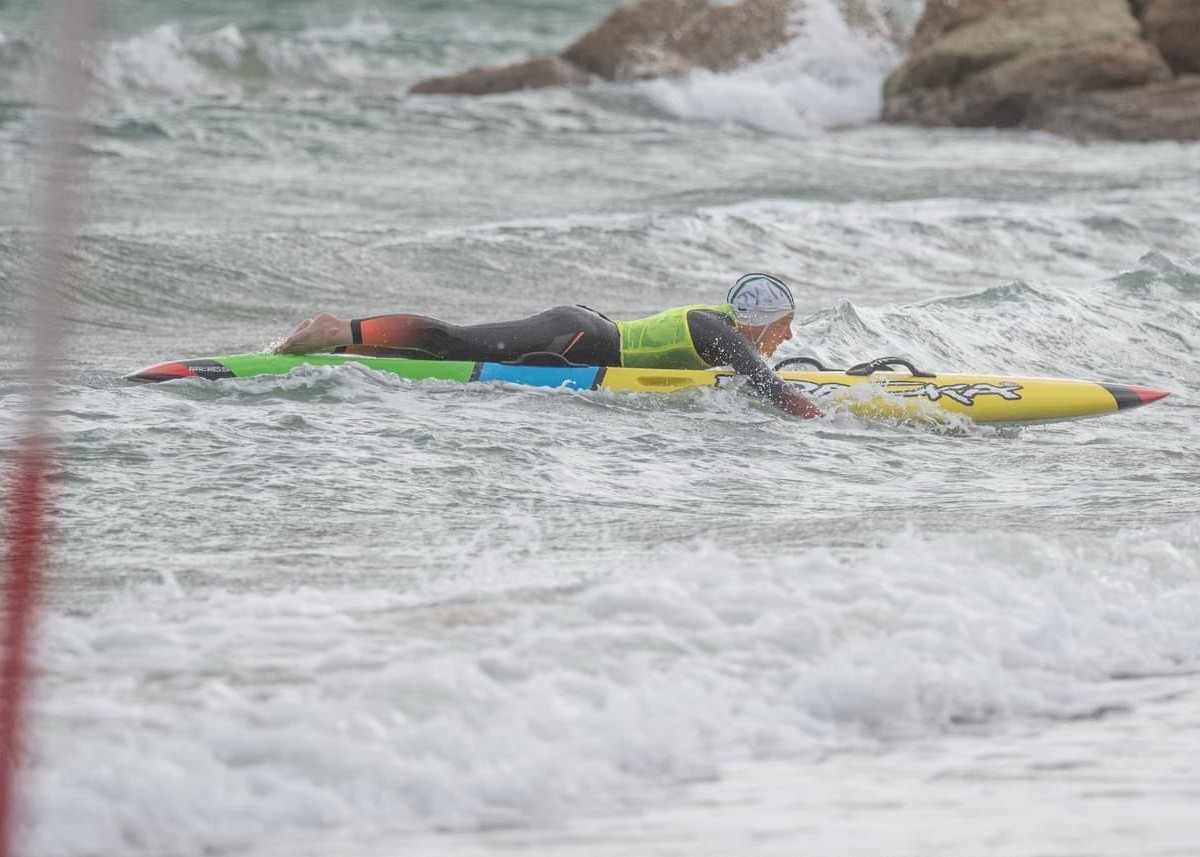
All ocean races are marked out by a start line in the sand, buoys indicating the course and flags to mark the finish. The surf race is a 400m swim event, the board race is a 600m paddle, either prone or on your knees depending on conditions and participant skills, and the surf ski is a 1200m course. These can be team events in a relay format, and the three disciplines as one race is an oceanman/woman.
Beach events include a 1k run for Masters and 2k for younger competitors. Sprint events are about 90m, with individual and 3-person relay versions. Also, we have an event named flags, which is like musical chairs and very closely contested! Competitors lie down facing away from a series of flags (batons in the sand) placed 20m behind them. On the referee’s command, “heads down”, chins must go onto our hands. At the whistle, we jump up, turn around and race to pick up a flag. The person without a flag is eliminated at each round until a winner is declared. It is tactical and fast!
Surf lifesaving is an incredible sport and hobby. It combines a feel-good factor connected to promoting safety and ocean awareness, with exciting opportunities to train with like-minded individuals. Most of all, sessions are great exercise, fun and exhilarating; they make me stronger and fitter and continually develop my confidence and promote physical and mental well-being.
If you live near the ocean and a surf lifesaving club, I encourage you to go along and experience it for yourself.
Find out more
Surf Lifesaving GB – Saving Lives and Uniting Communities
Gyllyngvase SLSC | We are lifesavers – Swim, Board, Run, Rescue (my local club)