
Don’t treat your average swims as failures: use them to learn instead
You’ve trained hard for your event. You felt ready. But then, although your performance was reasonable, it didn’t match what you had hoped for. Instead of being elated, you feel vaguely dissatisfied. If someone asks you about your swim, you might say something like:
“Well… it was OK, I guess.”
These middling swims are actually more common than the brilliant ones or the absolute disasters. What we often forget is that they can also be incredibly useful.
The flat feeling
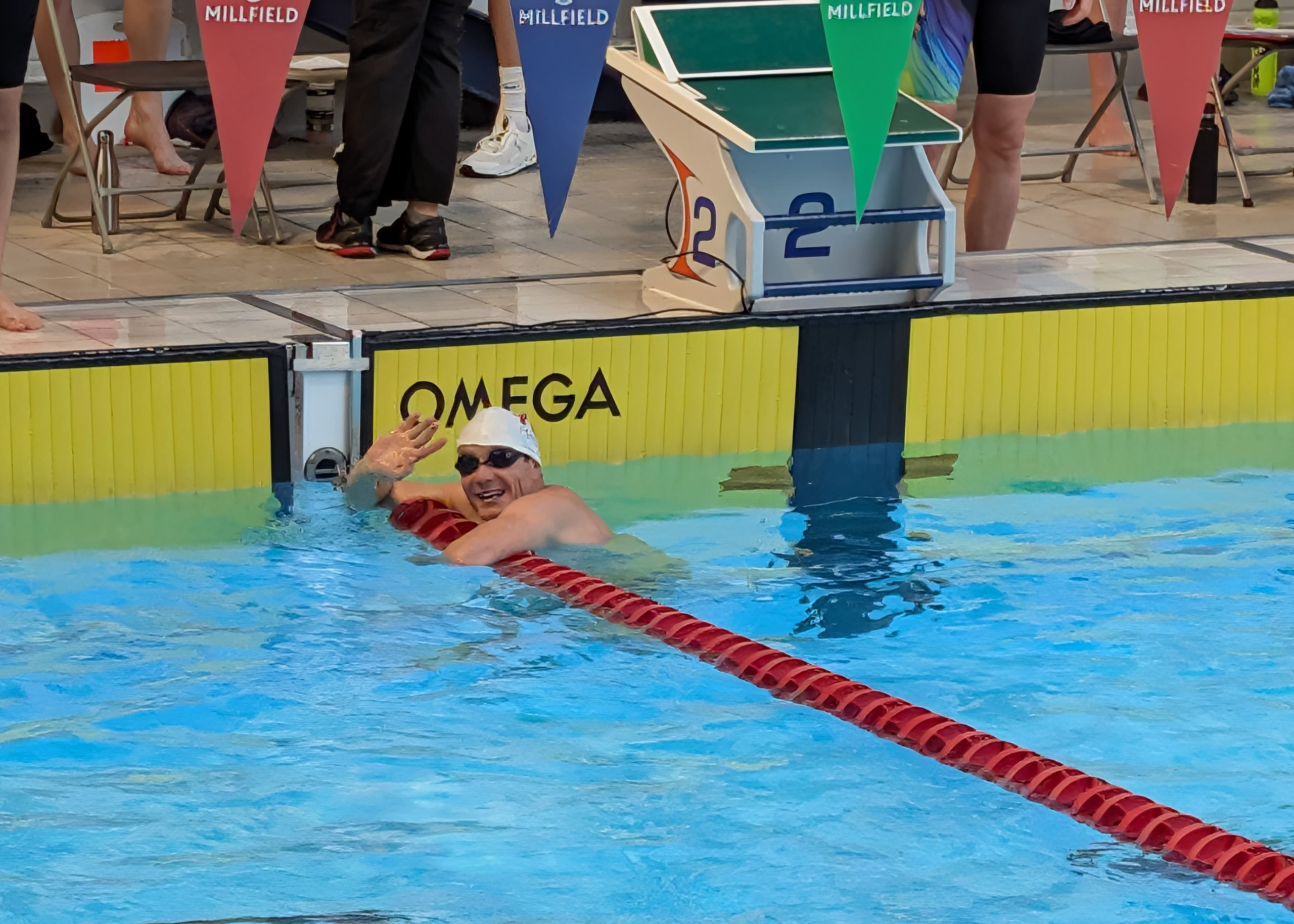
Last weekend, I raced at a masters event at Millfield School. The pool has a reputation for being fast and I feel like I am in good swimming shape at the moment. Training has been consistent and only a few weeks ago I produced a set of races I was proud of, including three personal bests.
So I arrived at Millfield with high expectations, but I went home feeling flat. My races were fine. I even won my age group in a couple of them. The problem was that the times were a little off where I thought they would be. I lacked a bit of fizz. Some skills were not as sharp as they should have been. A couple of dives were not clean. One or two turns went too deep. Breakouts lacked punch. Nothing terrible happened. It just did not click.
I was disappointed. Not because I didn’t swim well, but because I didn’t swim as well as I felt I should have done.
But on reflection, I realised swims like these give you most opportunities to learn.
Why average swims matter
Average swims encourage analysis. When you swim brilliantly, you celebrate rather than reflect. When you have a disaster, you are often too frustrated to see the lesson beneath the disappointment. The middle ground creates space for honest, productive review. Average swims might actually be your best teachers.
Instead of treating an average swim as a sign of failure, you can view it as a source of data. It is a chance to identify areas for improvement.
Learning to fly
Take my 100m butterfly as an example. I like to start by finding the positives. I felt relaxed and strong for the first 50m. I stuck to my plan of seven or eight underwater kicks. I focused on letting the stroke flow and staying smooth.
Then I turn to improvement points. I noticed my hands separating slightly as they entered the water. I kicked too soon after the dive and broke streamline early. Although my underwaters were good, the video shows I lost momentum just before surfacing. In the final 15 metres, my form began to fray. The video looks acceptable, but the stroke count went up by two and my coordination disintegrated. Someone I was level with at 75 metres pulled two seconds ahead.
These are not reasons to beat myself up. They are simply pieces of information that help me understand what to work on next.
Avoid the temptation to blame your training
It is very easy to explain away disappointing results. Maybe you did not train enough. Maybe you feel stressed. Maybe you slept badly. All of these things might be true, but they can also distract you from the more useful question: what actually happened in the water?
Life interferes with training for all of us. There is never enough time to do everything perfectly. The goal is not flawless preparation. It is making the best possible use of the swims you have. If you simply shrug and say you didn’t train hard enough, you miss the chance to learn.
Data helps you train smarter
The next time a swim leaves you feeling flat, remember that this is not a setback. It is feedback. You can use it to refine your skills, sharpen your training focus, and build confidence for the next race. Your average swims might not give you the thrill of a personal best, but they can become the engine of your long-term improvement. They give you the information you need to train smarter, not harder.
If you approach them with curiosity rather than frustration, they will teach you far more than you expect.
Checklist for analysing an average swim
Here is a way to approach your next “meh” performance:
- Let yourself feel disappointed for a moment. You are human. It is normal.
- Note what went well. Find at least two things.
- Identify one or two small leaks. Skills, pacing, mindset, or anything else that affected your race.
- Look for patterns rather than excuses. External factors might matter but do not stop there.
- Choose one training adjustment. Just one. Keep it simple and clear.
This process turns an unremarkable performance into meaningful progress. You don’t need a new PB to become a better swimmer. You just need the courage to study your ordinary swims.
