Lucy Young has been experimenting with a different approach to pacing this year, with positive results
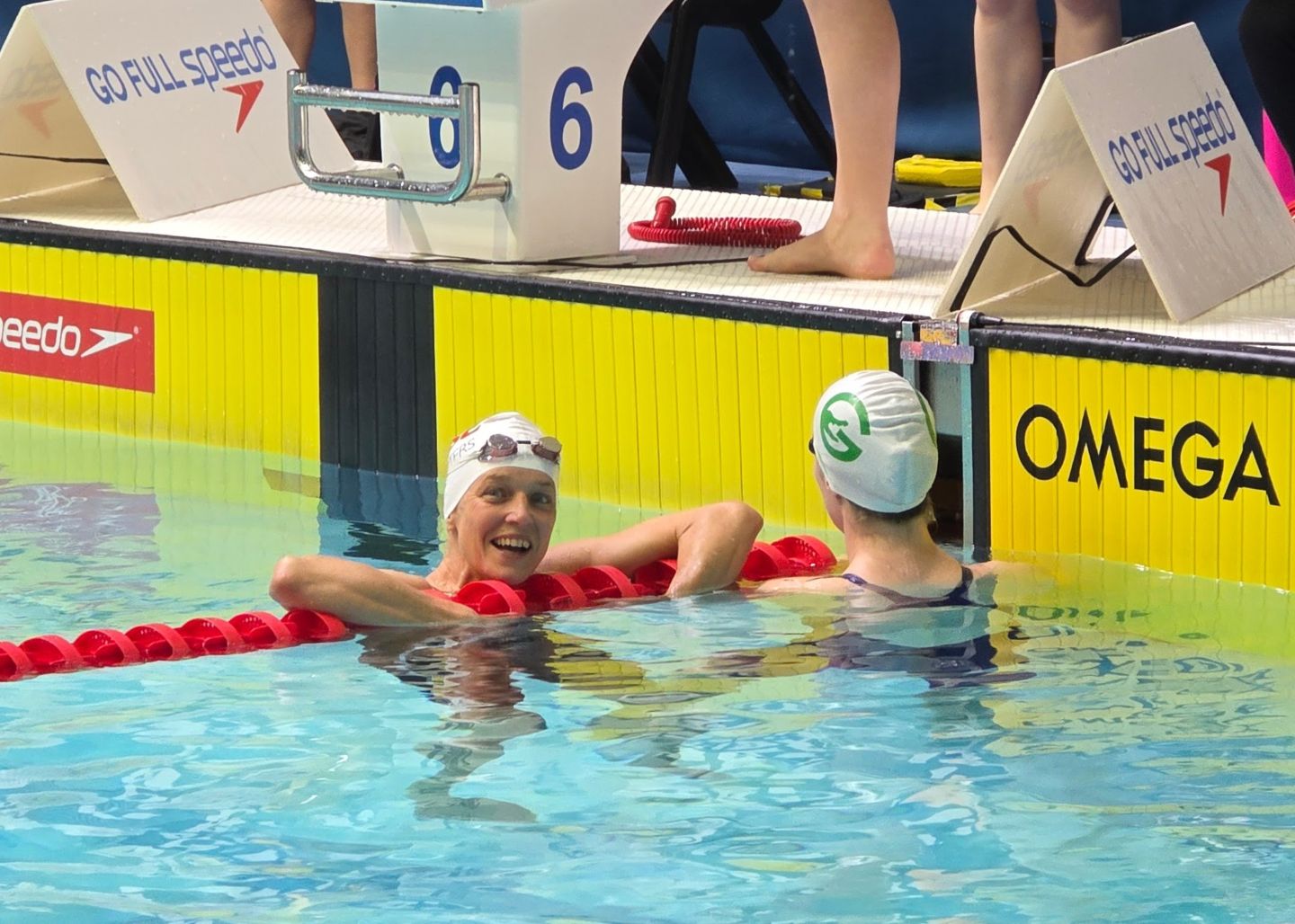
I came away from this year’s National Masters Swimming Championships with a bronze medal for a swim I was disappointed with, and fifth place in a swim I was delighted with. Held every October, the nationals are a chance to race against some of the top masters swimmers in the country.
I was therefore pretty chuffed with my medal in the 200m butterfly, although simultaneously disappointed with my swim. In fact, it was my slowest 200m butterfly out of the three I’ve done this year so, despite the medal, this definitely wasn’t my best swim of the weekend. It was a slog to the finish with concrete arms, trailing in the wake of stronger fly swimmers, who had more business than me swimming in that heat.
Lower ranking, better swim
Without a shadow of a doubt, my best swim was the 100m freestyle, even though it was only fast enough for fifth place in my age group. For me, it was a great swim. It was my quickest since 2016, and I have done many 100m freestyle races in the last decade.
It wasn’t a fluke that I pulled this swim out of the bag in the last event of the weekend after three days of racing. My preparation was better than usual this year: a good spell of consistent training during the summer, some sessions dedicated to sprints and turns, a bit more dedication with my stretch bands and mobility exercises, and a concerted effort to taper before the event.
However, I still needed to nail it on the day, and that was mainly down to pacing. I feel as if I got it just right, and it felt amazing because I finished strong.
A good swim, it turns out, is not determined by whether you collect a medal, but by how it compares with your own previous swims, how well you execute it, and how you feel at the end.
A new pacing strategy
I adopted the same pacing strategy for all of my freestyle swims in Sheffield this year. Across relays and individual events, I swam 50m freestyle twice, 100m freestyle three times and 200m freestyle once. For the 100m and 200m races in particular, my aim was to start controlled, then squeeze up the pace through the middle before finishing hard with everything I had left. Not rocket science, I know, but it is hard to do this in a race.
Inevitably, you get caught up in the excitement. It is easy to panic when swimmers around you start off fast, making you feel like you are instantly off the pace. Then there’s the burden of responsibility to your team, who are relying on you to swim a fast relay leg or cheering you on in the individual races. On top of this, there is a sense of occasion, as it is hard to secure a place at nationals, so obviously you want to do your very best.
When you dive in and you actively hold something back, it can feel like you should be trying harder. Self-doubt can easily creep in, especially in the face of observations from well-meaning teammates (and sometimes rivals in the pool who have checked out your splits) that you were ‘swimming a bit slow’ at the start.
But it worked. I was super consistent in my swims, and I felt strong at the end of each of my freestyle races. When my times started to prove my strategy, I held firm with my plan.
Control, control, squeeze, unleash…
If you are interested, my 50m splits in my individual 100m freestyle were 32.73 and 34.40. That’s a difference of 1.67, which I find remarkable if you take into account the dive at the start and the inevitable fatigue on the final length. I had a mantra in my head for each length (control, control, squeeze, unleash) and I concentrated on each turn to avoid any fumbled disasters (I have past form on this).
I clearly didn’t match the pace of Fleur Turner, who won my age group with 59.69, but her splits (28.81 and 30.88, giving her a difference of 2.07) suggest she followed a similar pacing strategy. So, you could argue that I had a similar “success” with my race execution, even if I am a long way off her speed.
In the past, I started my freestyle races faster and tried to hold on as fatigue accumulated. This sometimes resulted in slower times and more painful swims. In fact, I had come to dread the 200m freestyle because of my disappointing times, and how painful it was to swim. But this year, I swam my quickest time since 2017 and felt good doing it.
After a decade of struggling to break 1:08 for 100m freestyle, it felt great to swim 1:07.13. That isn’t a time that will set the world on fire, but it was an achievement for me. It is a reminder that you don’t need to win to feel like you have swum well and that a solid pacing strategy can help you to achieve the fastest time you can on the day.